

Festival Guides
Onam 2026: Spiritual Meaning, Home Preparation, and Sadya Etiquette
A warm Onam 2026 guide for home preparation, pookalam, sadya etiquette, King Mahabali symbolism, and inclusive celebration.
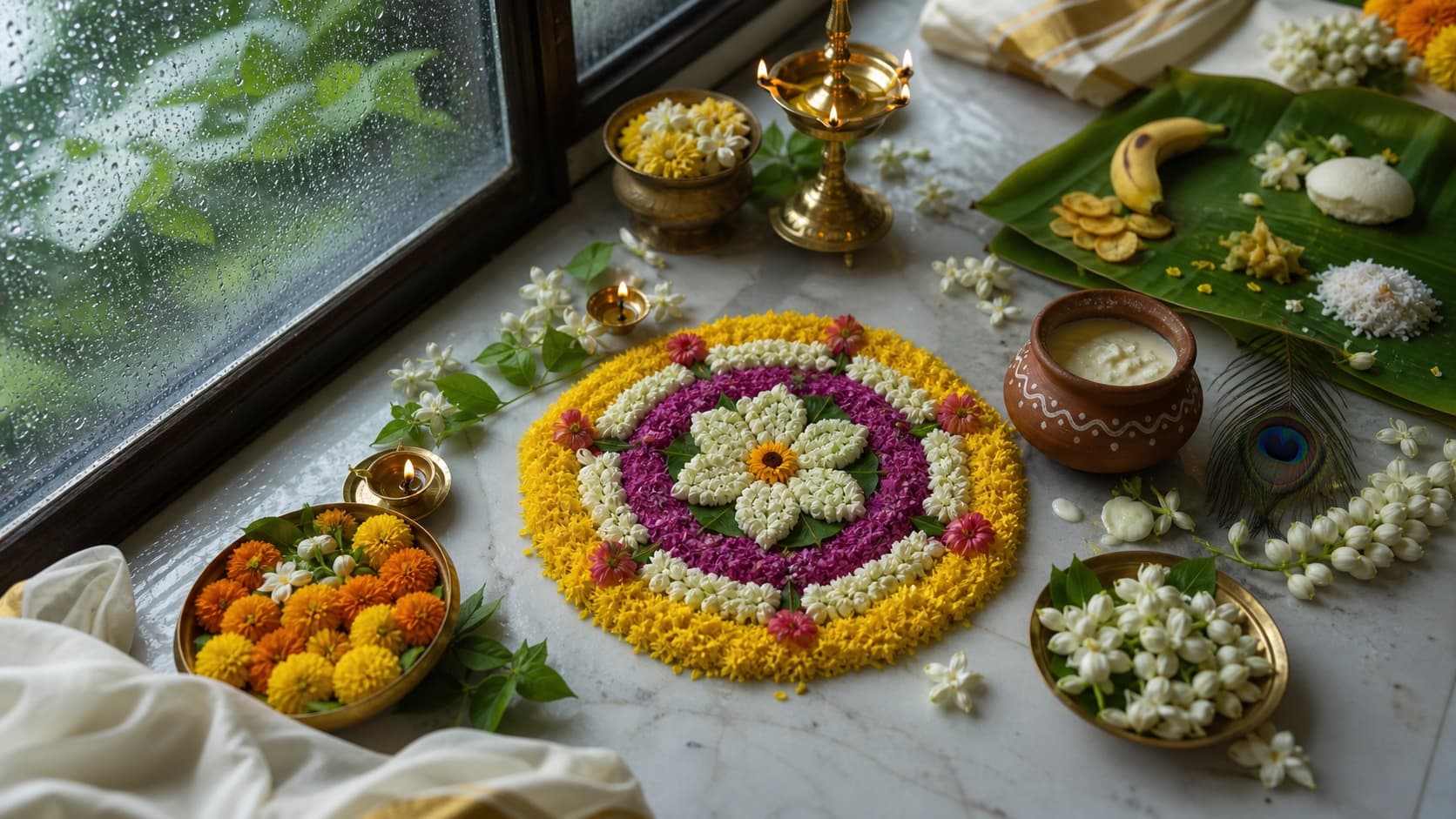
A warm Onam 2026 guide for home preparation, pookalam, sadya etiquette, King Mahabali symbolism, and inclusive celebration. It covers the date, meaning, home observance, practical preparation, and etiquette points so you can plan without last-minute confusion.
Festival or transit window: Onam, August 26, 2026
Use August 26, 2026 as the planning date for Onam. Exact tithi, Parana, Sankranti punya kaal, moonrise, or local observance timing can shift by city, time zone, and family tradition, so confirm the final timing with a trusted local panchang before the day.
Meaning and Context
Onam carries meaning through story, ritual, food, family memory, and seasonal rhythm. A good observance should help the home become calmer and more intentional, not more rushed. Use the festival as a practical way to remember devotion, gratitude, service, and restraint.
The Memory of a Just Home
Onam remembers King Mahabali and the longing for a world where people are fed, respected, and not divided by arrogance. The festival is joyful, but its moral center is serious: abundance should be shared, and leadership should be humble.
Pookalam and Home Preparation
The floral pookalam is not just decoration. It welcomes, honors the season, and brings the family into shared work. Use available flowers, keep the design clean, and let children participate. If fresh flowers are hard to find, a modest arrangement or reusable materials can still carry the feeling.
Sadya With Grace
Onam Sadya is a meal of generosity. Serve with attention, avoid food waste, and respect dietary needs. If you are hosting outside Kerala, explain dishes without turning the meal into a lecture. The spirit is hospitality, not perfection.
Practical Steps
- Confirm the date and local timing before planning the main observance.
- Prepare the altar, food, flowers, lamp, and family roles one day in advance.
- Keep the ritual simple enough for children, elders, or busy family members to join.
- Respect regional tradition while avoiding pressure, comparison, or display.
- Close the day with gratitude, cleanup, and a realistic plan for the next practice.
Do's for the Day
- Plan the meal according to your actual kitchen capacity.
- Let family members share pookalam or serving tasks.
- Keep the mood welcoming for guests unfamiliar with Onam.
- Avoid food waste by serving sensible portions.
- Remember Mahabali through generosity and fairness.
Don'ts to Keep in Mind
- Do not mock simplified celebrations outside Kerala.
- Avoid turning Sadya into a competition.
- Do not waste flowers or food for appearance.
- Avoid excluding non-Malayali friends who want to learn respectfully.
- Do not forget the ethical story beneath the celebration.
Related CELESTIAL Tools and Guides
- daily Panchang tool - confirm the local festival timing before planning.
- festival hub - see related Hindu calendar observances.
- puja services - a paid option when you need formal ritual support.
- Hariyali Teej 2026: Rituals, Fasting, and Meaning for Modern Homes - continue through the same seasonal planning cluster.
Next Step: Add This Date to Your Practice Calendar
If you plan to observe Onam, set a reminder now and confirm the local timing closer to the date. This keeps the practice calm, practical, and easier for the household to follow.
FAQ
What should I confirm for Onam?
Start with August 26, 2026, then confirm local timing, family tradition, and any special muhurat or ritual sequence before the day.
Can I observe this at home?
Yes. A clean home observance with a lamp, simple offering, prayer, and respectful food preparation is meaningful when temple attendance or elaborate ritual is not practical.
What should I avoid most?
Avoid fear, comparison, waste, unsafe fasting, and expensive rituals sold through pressure. Keep the observance useful, calm, and appropriate for your household.
A Grounded Way to Observe
Onam is a festival that asks the home to become generous. A clean pookalam, a shared meal, and one act of fairness can carry the story beautifully.