

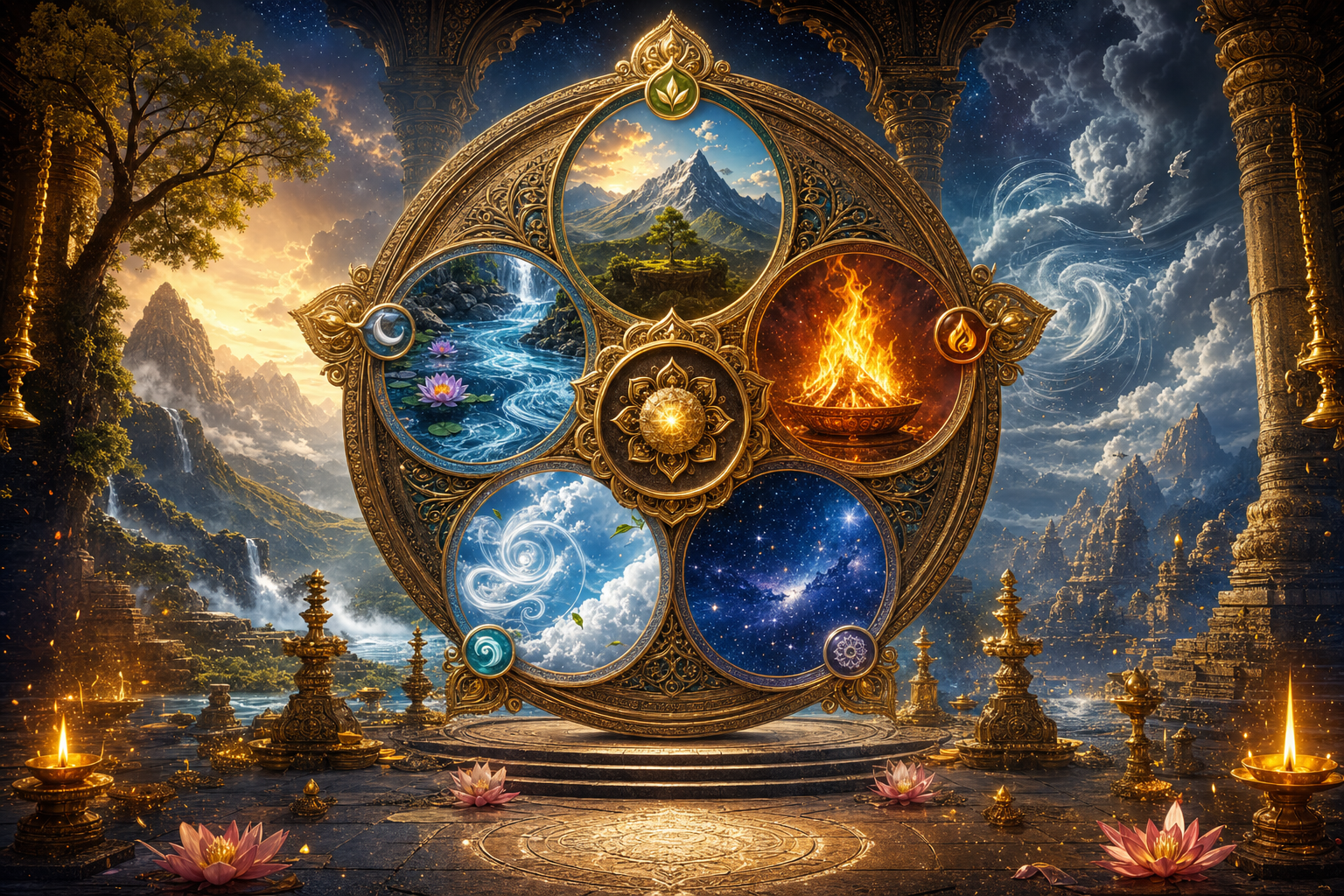
Panch Tattva
Panch Tattva names earth, water, fire, air, and space in traditional Indian accounts of nature. This guide uses their associations as symbolic prompts for reflection. This five-element framework is distinct from chemical elements and is not a medical assessment.
Panch Tattva practice calendar
Bring the conversation into daily practice with the next sacred observance, simple rituals, and prayers connected to this divine form.
Om Namah Shivaya
Namah Shivaya is the five-syllable core; the prefixed Om is additional. Elemental associations are traditional symbolism.
Om Suryaya Namaha
Salutations to the Sun, source of vitality and visible cosmic order.
Sacred names for daily japa
Choose one mantra and keep the practice steady rather than rushing through many.
Om Namah Shivaya
Namah Shivaya is the five-syllable core; the prefixed Om is additional. Elemental associations are traditional symbolism.
Devotional themes: steadiness and reflection
108 chants - Brahma muhurta, meditation, or five-element balancing practice
Om Suryaya Namaha
Salutations to Surya, the solar force of vitality and illumination.
Devotional themes: gratitude and responsibility
12 chants - Sunrise facing east
Om Chandraya Namaha
Salutations to Chandra, the lunar force of peace, emotion, and reflection.
Devotional themes: reflection and gentleness
108 chants - Monday evening or moon meditation
Om Agnaye Namaha
Salutations to Agni, sacred fire and transformative intelligence.
Devotional themes: offering and change
108 chants - During havan, lamp lighting, or disciplined reset practice
Om Vayuve Namaha
Salutations to Vayu, the life-force carried through breath and movement.
Devotional themes: breath awareness and attentiveness
108 chants - During pranayama or breath-centered meditation
Five-element reset
A quick daily Panch Tattva practice for embodied balance.
- 1Touch earth or sit with feet grounded for one minute.
- 2Drink water mindfully, then observe breath for 12 cycles.
- 3Light a lamp or visualize inner fire, then clear one small space.
Infinite Wisdom
Begin your journey with these sacred inquiries.
How can I use the five elements as reflective symbols?
"As reflective images, earth can suggest steadiness, water adaptability, fire change, air movement, and space openness. Choose an image that helps you consider your experience; these associations do not describe or diagnose bodily functions."
What does the Sun represent in Vedic astrology?
"In Vedic astrology, Surya is traditionally associated with vitality and authority. In this guide, those associations invite reflection on how you use your energy and influence; they do not measure health or personality."
How can lunar phases support reflection?
"The changing appearance of the Moon can serve as an optional reminder to pause and reflect. Notice your actual experience rather than assuming a lunar phase determines your mood."
What is the role of fire in rituals?
"In devotional symbolism, Agni is associated with offering and transformation. This guide uses that imagery to invite reflection on intention and gratitude, without promising a particular result from a ritual."
How is prana used as a traditional concept?
"In yogic traditions, prana names a concept of vital energy. Breath imagery can be a reflective cue here; it does not promise control over your mind or provide a medical explanation of physical processes."
Divine Attributes
Contemplate the multifaceted nature of the Divine.
Prithvi
Earth — stability, patience, grounding
Jal
Water — flow, emotion, adaptability
Agni
Fire — transformation, willpower, purification
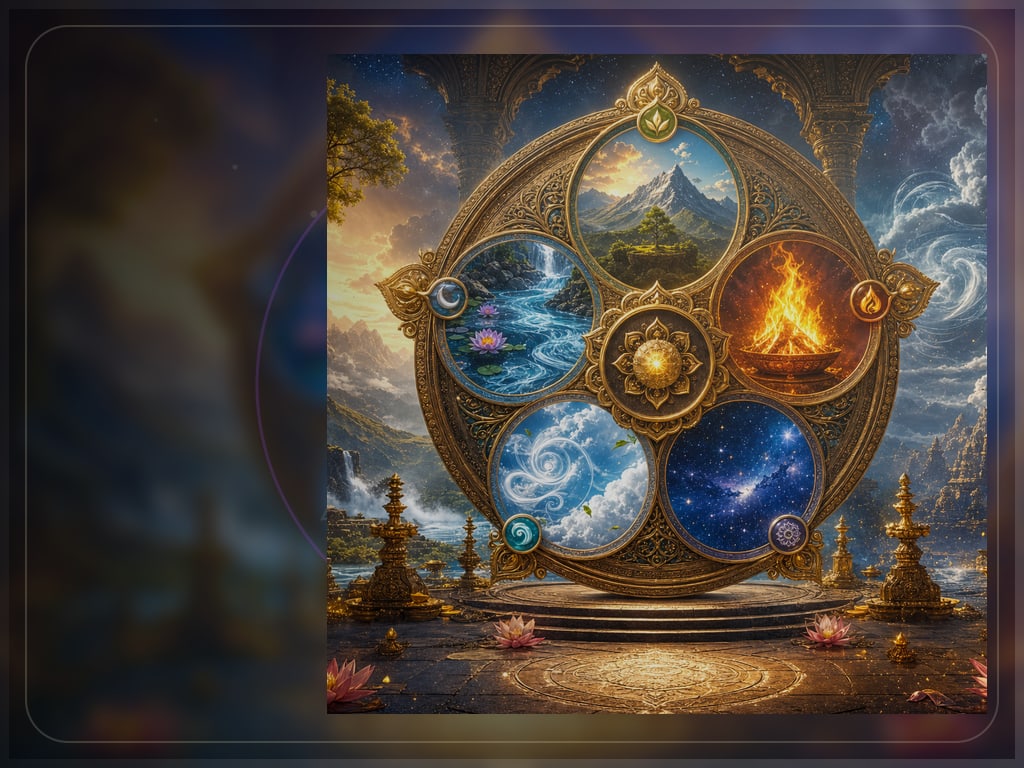
Vayu
Air — breath, prana, freedom, movement
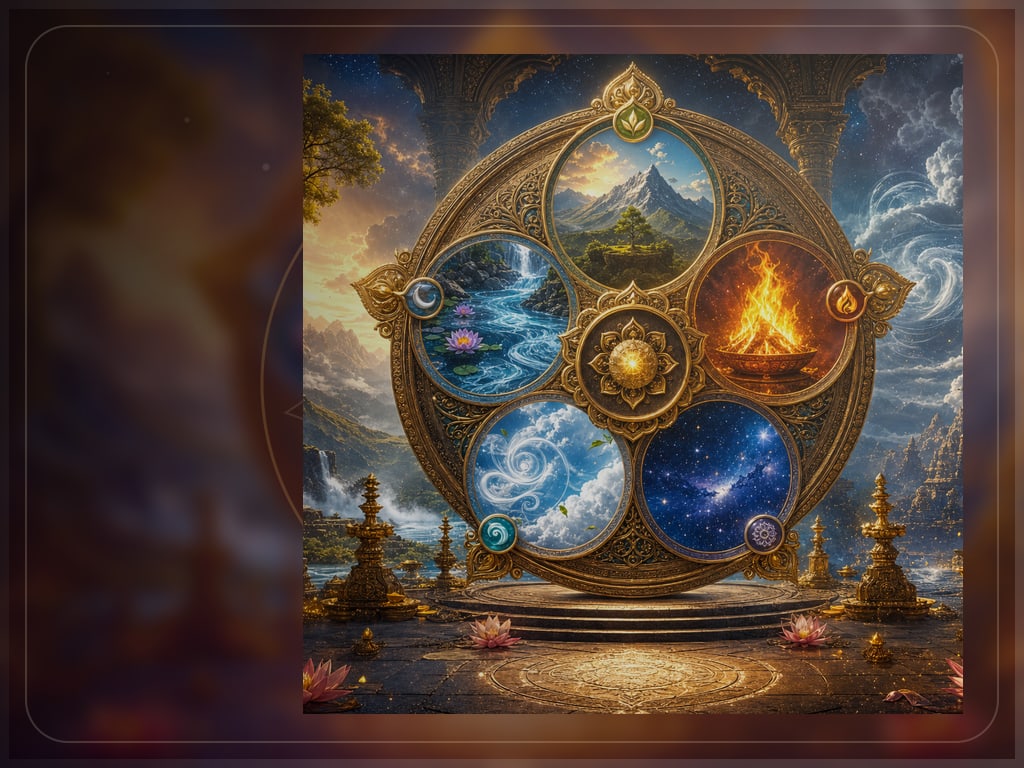
Akash
Ether — consciousness, space, expansion
Panch Tattva guidance is clearest when devotion becomes disciplined action.
Carry one insight from this page into practice, speech, service, or study before the day ends.