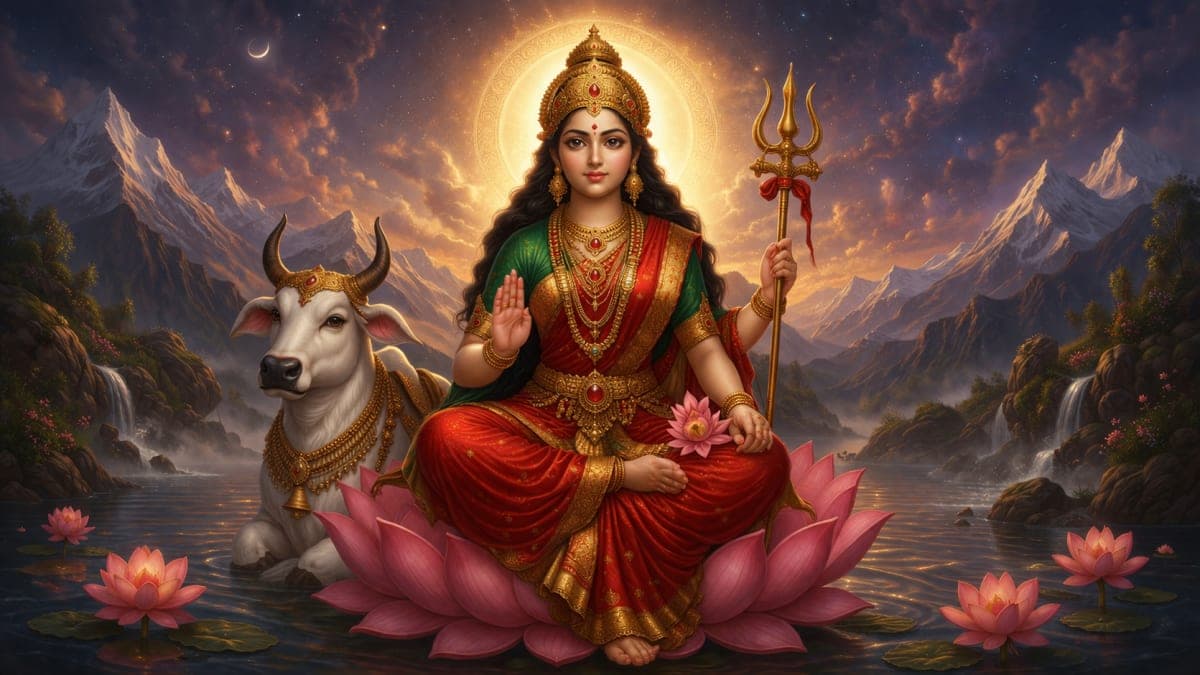
Deity ritual library

Maa Parvati Rituals

Maa Parvati rituals with 5 practices across daily worship, calendar observances, protection, home harmony, and focused life moments.

Best Time:

Monday morning or evening

Frequency:

Weekly on Monday

Practice library

5 available practices

Parvati Somvar Devotion ritual image
Beginner

Parvati Somvar Devotion

Honor Parvati with devotion, patience, and care for relationships.

Teachings in everyday life

Your daily practice

Choose a rhythm that fits your day and traditions. These are flexible suggestions; no fixed clock time is required. Skipping is fine. Begin again whenever you wish.

How much would you like to do?
Add optional prayers (0 selected)

Select only what is meaningful to you. Silent reflection is always available.

Morning prayers
Daytime prayers
Evening prayers

Choices last only while this page is open. This guide does not save progress or send reminders.

Morning

Begin with a balanced intention

  1. Choose one manageable act of care or responsibility for your day.

You can reflect silently, seated or lying down. Begin whenever your day begins.

Morning intention is an editorial application of the Gītā’s teaching on balance, not a prescribed wake-up time.

Text, meaning and source

Textual source identified

युक्ताहारविहारस्य युक्तचेष्टस्य कर्मसु। युक्तस्वप्नावबोधस्य योगो भवति दुःखहा॥

yuktāhāra-vihārasya yukta-ceṣṭasya karmasu | yukta-svapnāvabodhasya yogo bhavati duḥkha-hā ||

English meaning: For one balanced in food and recreation, measured in action, and balanced in sleep and waking, yoga becomes a means of easing suffering.

Bhagavad Gītā 6.17 (opens in a new tab)

The link includes a Gauḍīya Vaiṣṇava translation and commentary. The English meaning here is independently written; interpretations vary.

Daytime

Give attention to one responsibility

  1. Do the next useful task with care, without making recognition the goal.

Rest, asking for support and respecting your limits can be responsible choices too.

This everyday exercise is an editorial application of the teaching on action without attachment.

Text, meaning and source

Textual source identified

तस्मादसक्तः सततं कार्यं कर्म समाचर। असक्तो ह्याचरन्कर्म परमाप्नोति पूरुषः॥

tasmād asaktaḥ satataṃ kāryaṃ karma samācara | asakto hy ācaran karma param āpnoti pūruṣaḥ ||

English meaning: Continue to do the work that ought to be done without attachment; through such action a person reaches the highest.

Bhagavad Gītā 3.19 (opens in a new tab)

The link includes a Gauḍīya Vaiṣṇava translation and commentary. The English meaning here is independently written; interpretations vary.

Speak with truth and care

  1. Before one conversation or message, consider what is true, kind and useful.

Use writing, assistive communication or quiet reflection. Kindness allows clear boundaries.

The conversation prompt is an editorial application of the verse’s teaching on speech and study.

Text, meaning and source

Textual source identified

अनुद्वेगकरं वाक्यं सत्यं प्रियहितं च यत्। स्वाध्यायाभ्यसनं चैव वाङ्मयं तप उच्यते॥

anudvega-karaṃ vākyaṃ satyaṃ priya-hitaṃ ca yat | svādhyāyābhyasanaṃ caiva vāṅ-mayaṃ tapa ucyate ||

English meaning: Speech that does not distress, that is truthful, kind and beneficial, together with regular study and recitation, is called discipline of speech.

Bhagavad Gītā 17.15 (opens in a new tab)

The link includes a Gauḍīya Vaiṣṇava translation and commentary. The English meaning here is independently written; interpretations vary.

Evening

Close with a gentle reflection

  1. Recall one moment of care today and one thing you would approach differently.

Reflect silently or seated. A missed practice needs no catch-up or penalty; return when you wish.

Evening reflection is an editorial exercise inspired by the teaching on speech; the verse does not prescribe a bedtime ritual.

Text, meaning and source

Textual source identified

अनुद्वेगकरं वाक्यं सत्यं प्रियहितं च यत्। स्वाध्यायाभ्यसनं चैव वाङ्मयं तप उच्यते॥

anudvega-karaṃ vākyaṃ satyaṃ priya-hitaṃ ca yat | svādhyāyābhyasanaṃ caiva vāṅ-mayaṃ tapa ucyate ||

English meaning: Speech that does not distress, that is truthful, kind and beneficial, together with regular study and recitation, is called discipline of speech.

Bhagavad Gītā 17.15 (opens in a new tab)

The link includes a Gauḍīya Vaiṣṇava translation and commentary. The English meaning here is independently written; interpretations vary.

Ritual timing guide

Find practices for daily worship, weekdays, lunar dates, and festivals, then confirm the exact time with your local Panchang.

52

observances

3

practice guides

4

practice rhythms

Why this is showing

Core practice

Maa Parvati rituals with 5 practices across daily worship, calendar observances, protection, home harmony, and focused life moments.

Verify exact timing with the local Panchang before performing.
Available practices

5

Ritual categories

3

Calendar matches

1

Parvati Somvar Devotion ritual image
Beginner
30 minutes

Parvati Somvar Devotion

Honor Parvati with devotion, patience, and care for relationships.

Best Time:Monday morning or evening
Frequency:Weekly on Monday
Parvati Hariyali Teej Puja ritual image
Intermediate
45 minutes

Parvati Hariyali Teej Puja

Celebrate Parvati with renewal, devotion, and seasonal gratitude.

Best Time:Hariyali Teej or a chosen seasonal Friday or Monday
Frequency:Annual or seasonal
Parvati Home Harmony Ritual ritual image
Beginner
35 minutes

Parvati Home Harmony Ritual

Soothe the home atmosphere and restore respectful care.

Best Time:Evening after cleaning
Frequency:Weekly or after conflict
Evening Gauri Reflection ritual image
Beginner
30 minutes

Evening Gauri Reflection

A simple practice for harmony, emotional steadiness, and clean speech.

Best Time:Morning Goddess worship; verify locally
Frequency:Ashwina, Shukla Pratipada
Parvati harmony practice ritual image
Beginner
30 minutes

Parvati harmony practice

A practice for devotion, patience, and resilient love.

Best Time:Morning Goddess worship; verify locally
Frequency:Ashwina, Shukla Pratipada

Ritual Calendar

Daily

Morning Sandhya, Evening Aarti

Weekly

Specific deity pujas on designated days

Monthly

Ekadashi, Purnima, Amavasya rituals

Open Panchang calendar